


Fighting Cancer Alone but Together


Cancer treatment happens in rooms full of people. Family members rotate shifts in hospital chairs. Friends organize meal trains and fundraisers. Husbands hold hands during chemotherapy infusions. Children draw pictures taped to refrigerators. The love is real, the support invaluable, but the fight itself belongs to one person alone.
No one else can endure the nausea. No one else can tolerate the radiation burning through the skin. No one else can survive the exhaustion that makes lifting a fork feel impossible. Family can drive to appointments, but they cannot sit in the body receiving poison designed to kill cells, good and bad alike. Friends can offer encouragement, but they cannot force bones to rebuild after treatment strips them down. Support matters, but it cannot substitute for the patient's own will to continue.
Women with cancer discover a strength they never knew existed because survival demands it. They show up for treatment when every instinct screams to stay home. They swallow medications that make them sick. They submit to surgeries that alter their bodies permanently. They wake up each morning and choose to keep fighting even when the outcome remains uncertain. This is not inspirational platitude. This is biological reality. The body must heal itself. The mind must endure. No amount of love from others can do that work.
The loneliness of this truth does not diminish the importance of community. Women need their families, their friends, their support systems. They need people who will show up, who will listen, who will sit in waiting rooms and send encouraging texts. But they also need to recognize their own power. They are not passengers in someone else's fight. They are warriors in their own.
Cancer steals many things. It cannot steal the fundamental truth that survival belongs to the woman who refuses to surrender. Her body, her fight, her victory. Everyone else is reinforcement. She is the front line.
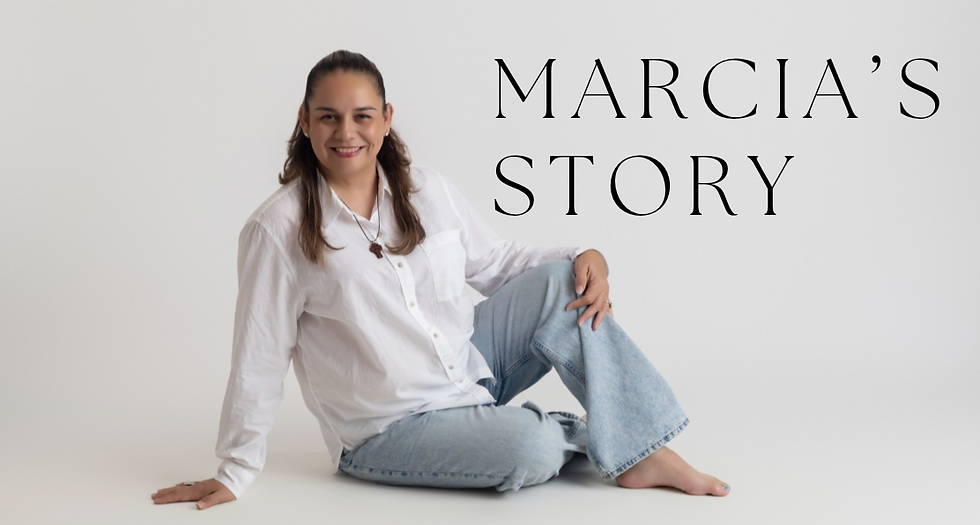
Marcia Gonzalez-Acosta was 32 years old when breast cancer upended her life. The year was 2009, and she was one of the youngest patients in the clinic, newly married to Victor Acosta, working as a speech-language pathologist with a master's degree from UTPA, and facing a diagnosis that forced impossible decisions before treatment even began. They froze embryos before chemotherapy. She started with radiation, then chemo, then years of tamoxifen. The treatments worked, but survivorship brought its own exhausting reality.
Fifteen years later, the checkups continue every three to six months. Every cough, every unexplained pain, every physical anomaly triggers the same question: is it back? The mental burden of constant vigilance is relentless. Gonzalez-Acosta calls herself a Pink Gladiator, a fighter who battles for her own life and for others, navigating the same fears. Fighting, she learned, requires more than enduring treatment. It requires confronting the perpetual anxiety of recurrence.
Her family showed up. Her husband, her parents, Erasmo and Oralia Gonzalez, her three older brothers Eric, Cesar, and Erasmus, her friends—they took turns sitting with her during hours-long chemo infusions. They filled the waiting room when she went in for results. They stayed on the phone when they couldn't be there in person. That support became the foundation for what came next.
Soon after treatment, Gonzalez-Acosta and her husband launched Pink Positive Breast Cancer Foundation. Their mission is to educate and support women facing what she had survived. Monthly meetings feature speakers addressing different aspects of survivorship because knowledge became her anchor during treatment, the only element she could control. Pink Positive raises funds to pay for diagnostic mammograms for uninsured women with medical prescriptions.
Pink Positive has now evolved into a support group where women learn to navigate their "new normal," a phrase that fails to capture the difficulty of rebuilding life after cancer.
Today, Gonzalez-Acosta is mother to eleven-year-old Mateo. She has slowed down in recent years, giving herself grace, but the women in Pink Positive's text message chains remind her why the work matters. Serving others, she believes, is how she repays God for survival. The fight continues, not just against cancer, but against the isolation and fear that follow it.

Margarita Medrano Avila felt the lump and did what most of us do when we're scared—she asked her friends what they thought. "It's nothing," they told her. "Don't worry about it." So she didn't. Not right away, anyway.
Growing up as one of nine kids in Roma, five boys, three girls, Maggie learned to tough things out. Her parents, Emma and Celso, raised their children to keep going, to not make a fuss. So when that bump on her right breast didn't hurt, didn't bother her, she figured her friends were right. It was probably nothing.
Then came her niece's quinceañera in 1985. Maggie was 34, a single mom raising three daughters on whatever she could scrape together. After the party, she looked down, and her breast had ballooned. Purple. Angry-looking. The kind of thing you can't ignore anymore, no matter how much you want to.
Dr. González in Roma took one look and said she needed a biopsy. But biopsies cost money Maggie didn't have.
She had three girls at home, Emma Beatriz, Erica, and Ilaria, and bills that never stopped coming. What was she supposed to do? Dr. González knew the reality of the Valley, knew how many families lived paycheck to paycheck. He sent her to Dr. Ochoa in Miguel Alemán, across the river, where medical care wouldn't bankrupt her.
The biopsy found twenty cysts. Twenty. One of them had wrapped itself around her nipple like it owned the place. Cancer doesn't ask permission, doesn't care if you're a single mother or if you have the money for treatment. It just takes.
They removed her breast. Maggie packed up her girls and moved to Donna so she could get chemo at Rio Grande Regional Hospital. Then radiation. Years of it. Her sister Elma showed up, held her hand, stayed close when everything felt impossible. That's what family does in the Valley: they show up.
Five years crawled by before doctors said the word: remission. But Maggie's not naive. She checks herself every year, watches for shadows, stays alert. Her daughters do too, even though the genetic test came back negative. This particular nightmare won't pass down to them like blue eyes or her mother's cheekbones.
There was no cancer in her family before her. She was the first. The unlucky one, or maybe the lucky one, depending on how you look at it. She's 74 now, forty years past that purple breast, that devastating diagnosis, that moment when everything changed.
Maggie's still here. Still checking. Still living. A Roma High School Gladiator, class of 1970, fighting battles most people will never see, crossing borders for care, raising daughters alone, surviving what should have killed her.
That's not inspiration. That's just Maggie.

Monica Silva missed her mammogram in 2021. Life gets busy, appointments slip through the cracks, and sometimes you tell yourself you'll get to it next year. By December 2022, when she finally went in at 56 years old, the technician's face told her everything before any words came out. Invasive ductal carcinoma, stage 1. MD Anderson confirmed it.
The treatments started immediately because cancer doesn't wait for you to catch your breath or wrap your head around what's happening. In March 2023, they removed the mass. A lumpectomy, not a full mastectomy, but still a piece of her carved out and thrown away. Right after surgery, her two dearest friends, Rosie Amador and Doralisa Muniz, stepped in and alternated care for two weeks. Then came three weeks of daily radiation that left her skin looking like the worst sunburn of her life, angry and raw and impossible to hide.
Monica grew up in Rio Grande City with her parents, Ramona and Abel Saenz, and her younger sister Laura. She graduated from Rio Grande City High School in 1984, eventually built a career working for the State of Texas, the kind of steady government job that's supposed to give you security and peace of mind. The four of them were close, the kind of family that shows up for each other without being asked. But when Monica needed her mother most, Ramona wasn't there. Not really. Alzheimer's had already stolen too much of her, left her somewhere Monica couldn't reach.
"It was a godsend that she didn't really know what was going on," Monica said. "But still, I needed my mother through this difficult time. I needed her support."
So it was Laura who stepped in. Laura who drove her to Houston for treatment, who sat in waiting rooms, who held her sister together when everything felt like it was falling apart. That's what sisters do when mothers can't anymore.
"People say that MD Anderson is the Disneyland of hospitals," Monica said. "I was so impressed. The level of compassion and support was what made this process a little more bearable."
Bearable. Not easy. Not simple. Just bearable enough to survive it.
Monica is 59 now, three years past her diagnosis. She's retired from her years with the state, single, free to spend her days however she wants. She has three kids, two daughters and a son, and three grandsons who don't understand yet how close they came to losing her. She caught it early. Stage 1. The kind of cancer that's survivable if you catch it, deadly if you don't.
That mammogram she skipped in 2021 haunts her sometimes. What if she'd waited another year? What if the technician's face had told a different story? But she didn't wait. She went. She fought. She's here.
Monica Silva is a reminder that sometimes the appointments we skip are the ones that save our lives. And when our mothers can't hold us up, our sisters will.
PHOTOGRAPHY BY KATY MENDEZ
@Santitos
@salinasmariasantos
Copyright © 2025 Maria Santos Salinas for FRONTeras.
All rights reserved. This material may not be published, broadcast, rewritten, or redistributed without permission. Sharing the original posts or links from FRONTeras on social media is allowed and appreciated.
Comments