


¿Quién Manda? Follow Abbott's Money

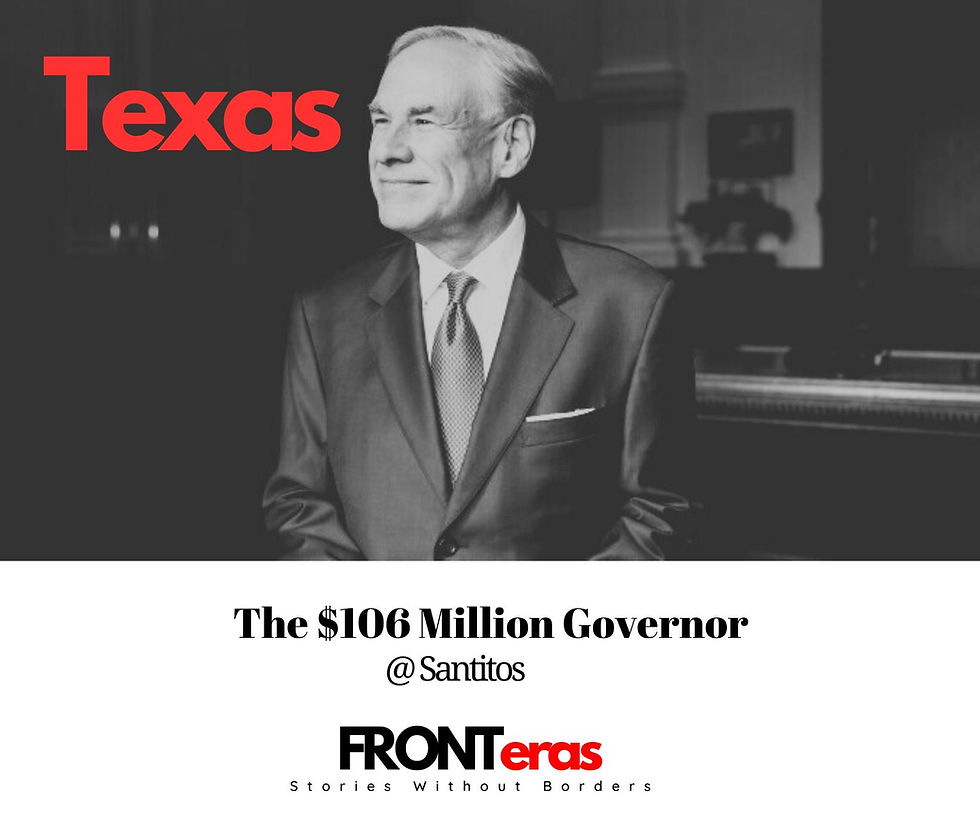
Greg Abbott's campaign account hit $105.7 million in January 2026. That staggering sum didn't come from bake sales or grassroots fundraising. It came from billionaires who expect results.
Pennsylvania billionaire Jeff Yass handed Abbott $6 million in December 2023, the largest single campaign donation in Texas history. Yass's net worth hovers around $29 billion, and his priority issue is school vouchers. Abbott spent 2024 using that money to unseat Republican legislators who opposed his voucher scheme, successfully knocking out nine anti-voucher incumbents. Another donor, casino magnate Sheldon Adelson's widow, funneled millions through various PACs to legislators willing to legalize gambling.
The oil and gas industry, real estate developers, and construction companies dominate Abbott's donor list. J. Doug Pitcock, CEO of Williams Brothers Construction, contributed $4.3 million. His firm received $1.9 billion in Texas Department of Transportation contracts since 2020. Hunter Industries owner John R. Weisman donated $1 million while his company secured $464 million in TxDOT highway contracts. Together, these two firms received 13% of all TxDOT highway work during that period. Abbott appoints the commission members who approve these contracts.
This transactional governance operates with astonishing transparency once you follow the money. Major donors receive favorable legislation. Ordinary Texans shoulder the financial burden.
Texas homeowners now face insurance premiums that jumped 21% in 2023 and another 19% in 2024, according to the Texas Department of Insurance. The average annual premium reached $3,851, making Texas the fifth most expensive state for homeowners' insurance. Between 2022 and 2023, insurance companies requested double-digit rate increases more than 150 times. Between January and July 2024, they requested an additional 74.
Abbott consistently blocked legislation providing consumer protections or rate stabilization. His top campaign contributors include executives from insurance companies profiting directly from Texas's deregulated market, which allows insurers to raise rates with minimal oversight. The Texas Windstorm Insurance Association recommended a 10% rate increase for 2025 policies. More than 100,000 homeowners turned to the state's insurer of last resort after private companies denied them coverage.
Electricity bills tell the same story. Texas residential electricity prices increased approximately 30% between 2021 and 2025, with rates rising from 11.7 cents per kilowatt-hour in 2020 to 15.1 cents in 2024. That's a 29% increase in four years, outpacing the national average of 25%. Energy company executives who donated generously to Abbott's campaigns watched their profits climb while consumers absorbed costs from grid failures and infrastructure neglect. The Public Utility Commission of Texas, whose members Abbott appoints, approved approximately $32 billion in new utility infrastructure costs between now and 2032. Consumers will pay for all of it.
The 2021 winter storm exposed fatal flaws in Texas's isolated power grid. Abbott promised reforms. What Texans got instead were more rate hikes and continued deregulation, favoring energy producers over consumers.
The tenant-landlord imbalance might be the most egregious example. Texas maintains one of the nation's most landlord-friendly eviction systems, affording tenants minimal due process. Over 164,000 evictions were filed in Texas's four largest cities in recent years. Landlords must provide only three days' notice before filing eviction proceedings, which can be shortened if specified in the lease. Once a judicial hearing occurs ten days later and judgment is delivered, tenants have just five days to appeal before a writ of possession is issued.
Abbott vetoed multiple bills providing basic renter safeguards. Real estate developers and large property management companies constitute a significant portion of his financial backers. Texas law heavily favors property owners, offering tenants minimal protections against arbitrary evictions or unsafe living conditions.
During the COVID-19 pandemic, Abbott assembled a "Strike Force to Open Texas" dominated by his mega-donors. At least 21 of the 39 council advisors had contributed more than $6 million to Abbott's campaign since 2015. Billionaires Drayton McClane Jr. ($1 million donor), Robert Rowling ($750,000), and Tilman Fertitta ($550,000) sat on the task force deciding when and how Texas would reopen its economy.
Abbott has raised over $50 million every year since 2020, even in years when he wasn't running for reelection. Texas is one of 11 states without contribution limits, enabling this spectacular fundraising. His donors receive appointments to university boards of regents, regulatory commissions, and influential task forces. They get meetings, phone calls, and the governor's ear whenever they need it.
The structural advantages clearly favor Abbott. His $105.7 million cash stockpile terrifies potential challengers before they even consider running. Democrats struggle to compete financially against a machine this well-funded. Abbott uses his war chest not just for his own campaigns but to punish legislators who cross him and reward those who comply.
Abbott faces multiple challengers in the March 2026 Republican primary, though none pose a serious threat given his financial advantage and incumbency. The Democratic primary field includes State Representative Gina Hinojosa from Austin, his most vocal critic on school vouchers. Hinojosa raised $1.3 million in the ten weeks after launching her campaign, with an average donation under $50 and zero corporate PAC contributions. Andrew White, a Houston businessman and son of former Governor Mark White, is making his second gubernatorial bid after losing the 2018 Democratic primary runoff. Bobby Cole, a retired firefighter and rancher, has just $27,465 on hand after raising under $61,000 from July through December.
Abbott's $105.7 million dwarfs the combined resources of every challenger in both primaries. Hinojosa's grassroots-funded $1.3 million represents less than 2% of Abbott's war chest. Abbott's campaign manager called Hinojosa "out of step with Texans" for supporting what they characterized as failed radical policies.
The Democratic primary is scheduled for March 3, 2026, with a potential runoff on May 26 if no candidate receives over 50%. Whoever emerges will face Abbott's unprecedented financial machine in November.
But Abbott stopped worrying about voters a long time ago. His loyalty lies elsewhere. Abbott's real constituents have already cast their votes.
The governor serves his real constituency quite well. They just don't live in your neighborhood.
@Santitos
@salinasmariasantos
Copyright © 2026 Maria Santos Salinas for FRONTeras.
All rights reserved. This material may not be published, broadcast, rewritten, or redistributed without permission. Sharing the original posts or links from FRONTeras on social media is allowed and appreciated.
FRONTeras is an independent publication protected by the First Amendment's guarantees of freedom of speech and freedom of the press. Our reporting and commentary draw from documented facts, public records, court filings, and reliable news sources. Opinions expressed in editorials are solely those of the author and do not constitute legal advice, divine truth, or the official position of FRONTeras. All articles, whether news, satirical or commentary, are produced according to journalistic standards of accuracy, fairness, and independence. While errors in reporting are possible, they will be corrected promptly once verified with credible sources. Critiques are grounded in evidence, not malice. Attempts to censor, intimidate, or punish the press will not alter the facts we publish. FRONTeras will continue to report without fear or favor.
Comments