


The Weight of Working Motherhood: When Guilt Shapes Parenting

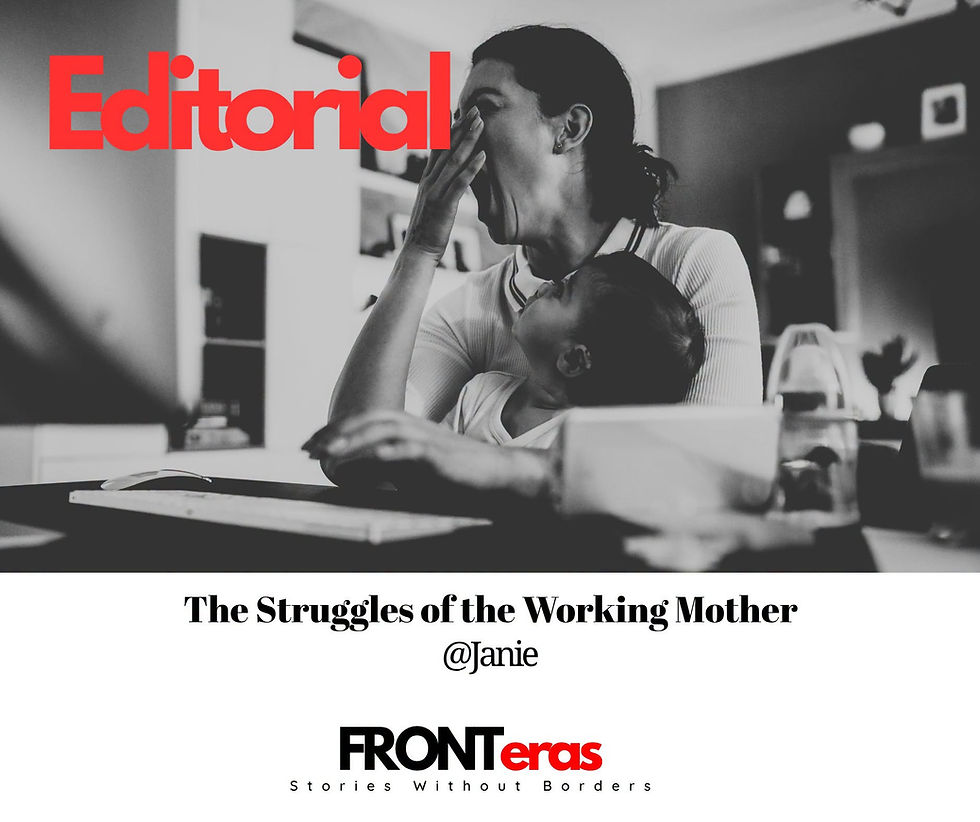
For generations, women were told they could "have it all." Higher education. A successful career. Financial independence. Marriage. Children. A beautiful home. Community involvement. Personal fulfillment. Yet what many women discovered is that "having it all" often came with the expectation of doing it all.
Today's working mother frequently balances professional responsibilities while carrying much of the invisible labor that keeps a household functioning. She remembers doctor's appointments, manages school calendars, prepares meals, coordinates extracurricular activities, comforts sick children, supports aging parents, and often serves as the emotional center of the family, all while meeting deadlines, attending meetings, and advancing her career.
The result is a reality familiar to millions of women: parental guilt.
Research has consistently found that mothers report higher levels of parenting guilt than fathers, particularly when balancing employment and family responsibilities. While fathers increasingly share caregiving duties, cultural expectations continue to place a disproportionate share of emotional responsibility on women.
Many mothers question whether they are spending enough time with their children. They wonder whether working late, traveling for business, or pursuing career opportunities somehow makes them less present or less devoted. These questions often arise not because they are neglecting their children, but because society continues to hold mothers to standards that are difficult, if not impossible, to achieve.
Feeling guilty is not inherently harmful. Allowing guilt to guide parenting decisions, however, can become problematic. Some parents, believing they have missed valuable time with their children, begin compensating in ways they believe will make up for their absence. They may become reluctant to enforce rules, avoid saying "no," purchase expensive gifts in place of shared experiences, or rescue children from the natural consequences of their actions.
These decisions are rarely rooted in poor intentions. More often, they stem from love mixed with self-doubt.
Ironically, child development experts consistently emphasize that children benefit most from predictable routines, healthy boundaries, emotional security, and consistent parental involvement, not perfection. Children generally need dependable parents more than endlessly accommodating ones.
Is there a double standard? The answer is yes.
Working fathers are often praised for providing for their families. Working mothers are still frequently asked how they balance their careers with raising children. The question itself reveals a cultural double standard. Professional ambition in men is commonly viewed as responsibility. In women, it can still invite scrutiny, criticism, or assumptions about their priorities. This social pressure contributes to unnecessary guilt that many mothers quietly carry for years.
Children rarely measure love by the number of hours a parent spent at home. Instead, they remember moments. A bedtime story. Dinner around the table. A conversation after school. Encouragement before a difficult test. A parent who listened without distraction. These seemingly ordinary moments become the memories that shape childhood.
Research suggests that the quality of interactions often has a greater impact on children's emotional well-being than simply the quantity of time spent together.
Should we redefine success?
Perhaps the greatest gift a working mother can give herself is permission to redefine success. Success is not perfection. It is raising children in a home where they feel loved, respected, emotionally safe, and supported. Children also benefit from watching their mothers pursue meaningful work. They witness perseverance, responsibility, resilience, leadership, and financial independence. Daughters learn that opportunity has no gender. Sons learn to value women as equals both inside and outside the home. A mother's career is not evidence that she loves her children less.
For many families, it is evidence of sacrifice, commitment, and purpose.
Every family is unique. Every parent faces different challenges, opportunities, and circumstances. There is no universal formula for raising children, and perfection has never been the standard.
This article is not intended to criticize working mothers or suggest that anyone is parenting incorrectly. Rather, it invites all parents to pause and honestly reflect on the motivations behind their decisions. Are those choices being guided by confidence, consistency, and long-term values, or by guilt and the desire to compensate?
Self-reflection is one of the greatest strengths a parent can possess. If, through that reflection, we recognize opportunities to improve, then we owe it to ourselves and to our children to make those adjustments with intention, humility, and love. Parenting is not about getting everything right. It is about continuing to grow alongside the children we are privileged to raise.
@Janie
@alvarezjanie
Copyright © 2026 Janie Alvarez for FRONTeras.
All rights reserved. This material may not be published, broadcast, rewritten, or redistributed without permission. Sharing the original posts or links from FRONTeras on social media is allowed and appreciated.
Comments